

How to Build Trust and Respect in a Relationship
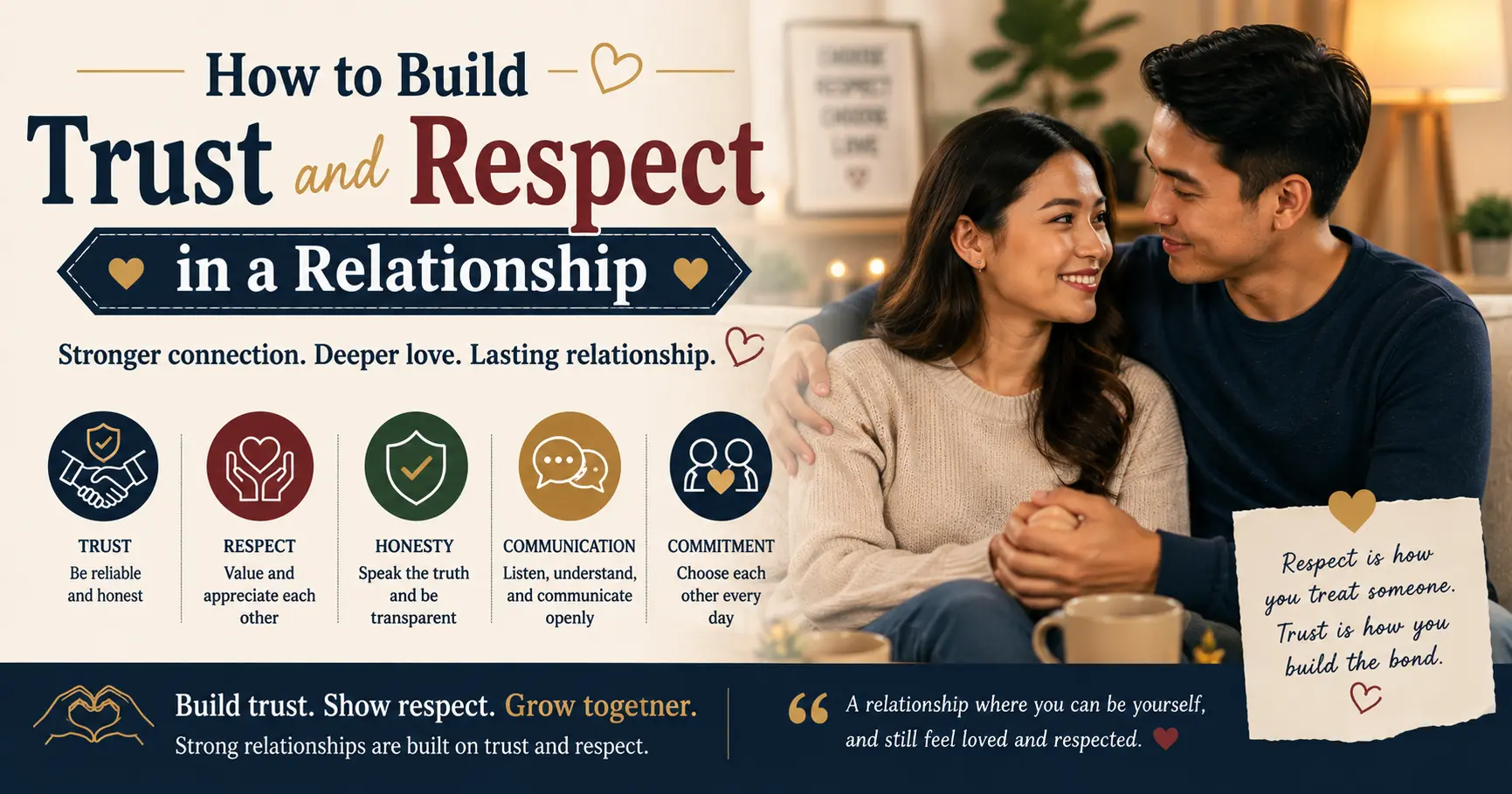
How to Build Trust and Respect in a Relationship
Trust and respect are two of the most important foundations of a healthy and lasting relationship. While love brings people together, trust and respect help relationships grow stronger through life’s challenges.
If you’re working on strengthening your relationship, these articles may also help:
- How to Build Trust in a Relationship
- Why Communication Is the Key to a Healthy Relationship
- How to Create a Strong Foundation for a Lasting Relationship
- How to Build Emotional Intimacy in a Relationship
Without trust and respect, even strong relationships can struggle. The good news is that both can be built and strengthened over time.
1. Be Honest and Transparent
Trust grows when partners consistently tell the truth and communicate openly.
Honesty creates emotional safety and reduces uncertainty in relationships.
2. Keep Your Promises
Reliability strengthens trust. Following through on commitments demonstrates integrity and respect.
3. Communicate Respectfully
Healthy communication involves listening, understanding, and expressing opinions respectfully.
Learn more in our guide on communication in a relationship.
4. Respect Differences
Every person has unique beliefs, experiences, and perspectives. Respecting differences strengthens relationships.
5. Support Each Other’s Goals
Healthy couples encourage personal growth and celebrate each other’s achievements.
6. Practice Active Listening
Listening without judgment helps partners feel heard, valued, and understood.
7. Build Emotional Intimacy
Trust often grows when partners share feelings, fears, and personal experiences.
Our article on building emotional intimacy in a relationship offers additional guidance.
8. Avoid Controlling Behavior
Respect involves allowing your partner to maintain their individuality and independence.
9. Handle Conflict Maturely
Disagreements should focus on solving problems rather than attacking each other personally.
10. Demonstrate Appreciation Regularly
Simple acts of gratitude help partners feel respected and valued.
Final Thoughts
Trust and respect are not built overnight. They develop through consistent actions, honest communication, emotional intimacy, and mutual support.
Many of these principles are also discussed in our article on creating a strong foundation for a lasting relationship.
When trust and respect become a priority, couples create stronger, healthier, and more fulfilling relationships that can last for years to come.
Better Relationships. Smarter Finances. Happier Lives.
Tags: emotional intimacy, healthy couples, healthy relationships, long term relationship, relationship advice, relationship communication, relationship goals, relationship growth, respect in relationships, strong relationship, trust and respect in a relationship, trust in relationships


Posted by Smart Couple Life Team
Smart Couple Life Team provides practical advice and educational content on relationships, marriage, family life, and personal finance. Our mission is to help couples build stronger relationships, smarter financial habits, and happier lives together.
How to Build Trust and Respect in a Relationship
Other Articles

How to Build a Relationship That Gets Stronger Over Time Many couples begin a relationship with excitement and strong emotions, but lasting relationships require more than initial attraction. The stro...

10 Signs Your Relationship Is Built to Last Many people wonder whether their relationship has the potential to stand the test of time. While no one can predict the future with certainty, healthy and l...

How to Maintain a Healthy Relationship Long-Term: 12 Proven Habits Building a healthy relationship is important, but maintaining it over the years requires consistent effort. Successful couples unders...

How to Apologize and Rebuild Connection After an Argument Arguments happen in every relationship. Even healthy couples occasionally disagree, become frustrated, or say things they later regret. What t...
Comment (0)
How to Build Trust and Respect in a Relationship
Site Statistics
- Users online: 0

- Visitors today : 0
- Page views today : 0
- Total visitors : 611
Smart Couple Life - Better Relationships. Smarter Finances. Happier Lives.
Affiliate Disclosure I Disclaimer I Contact Us I Privacy Policy I About Us I Terms & Conditions
© 2026 All Rights Reserved

There are currently no comments available